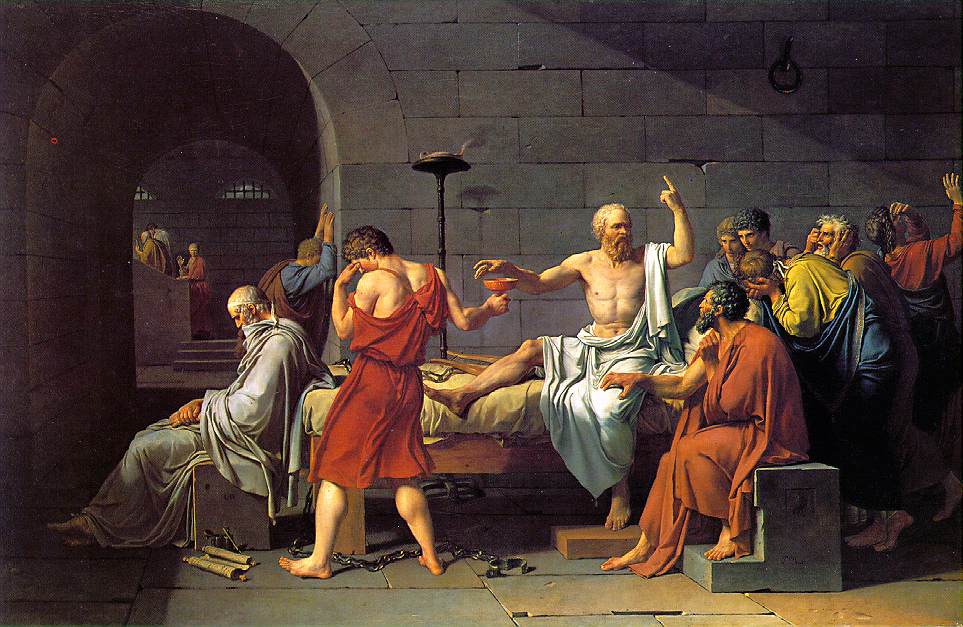
Thanks Cory, I was wondering where we were. Your post reminded me of one of my favorite poems (oh boy here he goes again!). The last two lines are one of my favorites to quote.
Paul
ULYSSES
Alfred, Lord Tennyson
It little profits that an idle king,
By this still hearth, among these barren crags,
Matched with an aged wife, I mete and dole
Unequal laws unto a savage race,
That hoard, and sleep, and feed, and know not me.
I cannot rest from travel; I will drink
life to the lees. All times I have enjoyed
Greatly, have suffered greatly, both with those
that loved me, and alone; on shore, and when
Through scudding drifts the rainy Hyades
Vexed the dim sea. I am become a name;
For always roaming with a hungry heart
Much have I seen and known---cities of men
And manners, climates, councils, governments,
Myself not least, but honored of them all---
And drunk delight of battle with my peers,
Far on the ringing plains of windy Troy.
I am part of all that I have met;
Yet all experience is an arch wherethrough
Gleams that untraveled world whose margin fades
Forever and forever when I move.
How dull it is to pause, to make an end.
To rust unburnished, not to shine in use!
As though to breathe were life! Life piled on life
Were all too little, and of one to me
Little remains; but every hour is saved
From that eternal silence, something more,
A bringer of new things; and vile it were
For some three suns to store and hoard myself,
And this gray spirit yearning in desire
To follow knowledge like a sinking star,
Beyond the utmost bound of human thought.
This is my son, my own Telemachus,
To whom I leave the scepter and the isle---
Well-loved of me, discerning to fulfill
This labor, by slow prudence to make mild
A rugged people, and through soft degrees
Subdue them to the useful and the good.
Most blameless is he, centered in the sphere
Of common duties, decent not to fail
In offices of tenderness, and pay
Meet adoration to my household gods,
When I am gone. He works his work, I mine.
There lies the port; the vessel puffs her sail;
There gloom the dark, broad seas. My mariners,
Souls that have toiled, and wrought, and thought with me---
That ever with a frolic welcome took
The thunder and the sunshine, and opposed
Free hearts, free foreheads---you and I are old;
Old age hath yet his honor and his toil.
Death closes all; but something ere the end,
Some work of noble note, may yet be done,
Not unbecoming men that strove with gods.
The lights begin to twinkle from the rocks;
The long day wanes; the slow moon climbs; the deep
Moans round with many voices. Come, my friends.
'Tis not too late to seek a newer world.
Push off, and sitting well in order smite
the sounding furrows; for my purpose holds
To sail beyond the sunset, and the baths
Of all the western stars, until I die.
It may be that the gulfs will wash us down;
It may be that we shall touch the Happy Isles,
And see the great Achilles, whom we knew.
Though much is taken, much abides; and though
We are not now that strength which in old days
Moved earth and heaven, that which we are, we are---
One equal temper of heroic hearts,
Made weak by time and fate, but strong in will
To strive, to seek, to find, and not to yield.
1842
Friday, March 20, 2009


The pursuit of happiness outside of God's purpose and plans for our lives is hedonism. It's a life focused completely on maximizing pleasure in all it's facets without regard for God's directions and purpose. Such a life style alienates others and leaves us deeply empty and unfulfilled. Ie, dead! I might share some of these ideas this Sunday when Jesus' life is compared with Adam's life in my resurrecton passage.... hm?? Something to think about.
Chuck
Chuck
Modern or Classical Happiness
It has been a while since I have posted anything, but I haven't forgotten about ithink. I still don't know when to plan on getting together, the calendar is full. But I have been planning on getting back to some posting. Posts from anyone else are welcome, too.
Back on Dec 30 there was a post about Aristotle and the idea of happiness, and how it relates to virtue. I just received a monthly ministry update from a friend who is the western regional director for the Christian Medical and Dental Associations. He spends much of his time touring the western region of the US speaking to physicians, dentists, and students. Recently he spoke about 'The Counter-Intuitive Pursuit of Happiness," and he shared some of this in his letter:
"...And we had a wonderful interactive discussion trying to define and identify modern 'happiness,' it's fleeting yet addictive attributes that create a false self, nurtured only by self-indulging narcissism. Contrast this with classical 'happiness,' which is more enduring, liberating, completely integrated, produced only be self-denying apprenticeships. And you can see the attraction as they had never heard anything like it before.
...We are all so able and apt to justify our sin, not recognizing that our heavenly Father has our best interest at heart. Many resist his principles as they seem so difficult, yet we invite such pain, regret and heartache when we insist on finding 'happiness' in our own way. Fidelity, forgiveness, fortitude, and forthrightness keep us in good stead with each other and with God. Are you hiding and rationalizing something you know to be sin? Share it with a trusted friend who will help you make good choices: an unforgiving heart, constant negative thoughts toward someone, lustful thoughts, an ungrateful spirit, greed, lying or deceit?
The 'happiness' we seek is only to be found in following the principles written in the "operators manual...""
On our recent trip to Colorado, Michal and I listened in the car to a lecture we had heard before about virtue, happiness, and having an abundant life. (Perhaps we are odd, but that's a great way to pass the time.) The lecture, of course, leaned to a pre-modern vs a modern or post-modern perspective. The Greek myth about Ulysses was used as an example of how the ancients viewed life and happiness. At one point in the story Ulysses is trapped on an island by the goddess Calypso. In some ways he had it made. She offered him immortality if he would stay there on the island. He could live forever and have a beautiful goddess share her bed with him. To some people that would seem better than winning the lottery. What could make him 'happier.' Well, Ulysses couldn't stay there because it was killing him. If he could not be who is was, and if he could not fulfill his purpose, even if he lived forever it would be killing him. He was a king, a father, a husband, and a warrior. If he stayed there on the island with Calypso, the man could have lived there forever, but Ulysses would have died. He would not have had an 'abundant life.'
Michal made a great observation at that point. God told Adam to eat from any tree in the garden, except the tree of the knowledge of good and evil, "for in the day that you eat from it you shall surely die." Adam and Eve ended up eating, and they died. Physically they were alive, but the relationship with God was broken. They couldn't live any longer the way they had been designed to live, they could not fulfill their purpose, and they died. Pursuit of their own definition of happiness had cost them their lives.
Thanks be to God through Jesus Christ our Lord, that now we can walk in the Spirit again, and wait eagerly for our adoption as sons, the redemption of our body. (Romans 7 and 8) We live!
Saturday, January 17, 2009
Virtue vs Value Ethics
In the post on virtue ethics I mentioned how 'values' are the common way of understanding ethics today. Have you ever heard someone say, "Oh, I'm a good person, I have values." People say things like that all the time, but it doesn't really say anything. All a value is in this way of speaking is a subjective, arbitrary moral judgement. We all make moral judgements, it's just that some people make bad ones. These subjective judgements are personal and don't hold true for anyone else. If someone says to you, "I have values, and I don't believe in killing animals, and I don't believe in eating meat," just say back,"OK. I have values, too, and I believe in killing animals whenever I need to and I eat as much meat as I can." There's nothing else either one of you can say if you really believe in 'values'. This exemplifies the incoherence of the modern way of looking at things. It all boils down to power. There is nothing right or wrong, only power, political or otherwise, to dictate which values win.
Christian philosophers have been paying a lot more attention to virtue ethics in the last few years because of this. That means going back to Aristotle, and has led to more study of Thomas Aquinas. Interestingly, the ancients had no word for 'value' in this moral sense at all. They had a word for value in the sense of, "the value of this loaf of bread in $2." But 'value' as in 'family values' is a very new word. The Oxford English dictionary didn't have an entry for the word value in this sense until a supplement in 1986. It seems the first use of the word in English is found in a sociology paper from 1918. But it goes just a little farther back in German to about the 1880's and Nietzsche, and was eventually just absorbed into common language. Nietzsche talked a lot about values and 'transvaluation', getting people to change their values. (I need to check this, but I think the word was used in this way by some others in the 19th century before Nietzche, like Karl Marx, but some people have said Nietzsche basically coined the term.)
Now, a discussion of Nietzsche is premature, but I would like to say that Nietzsche isn't as bad as he is sometimes made out. He is attributed with creating Hitler and killing God, and all sorts of things that are really unfair. His philosophy was bad, certainly, and he did reject Christianity, but he was a lot more complicated most people know. Not all of what he said was wrong. And he was not a nihilist or a relativist. In fact, he had the sense to know that if the world no longer believed in God, existence really was like looking out over a great abyss. But enough of Nietzsche for now. Suffice it for the moment to say that he coined a new term, and it stuck.
It is important to realize that there is more to morality than a set of 'values.' Even if they are 'family values.' If someone says to you,"well, your family values aren't my values," there is really nothing you can say to them." Instead of saying, "that's against my family values," say, "that's not right," then explain why.
Christian philosophers have been paying a lot more attention to virtue ethics in the last few years because of this. That means going back to Aristotle, and has led to more study of Thomas Aquinas. Interestingly, the ancients had no word for 'value' in this moral sense at all. They had a word for value in the sense of, "the value of this loaf of bread in $2." But 'value' as in 'family values' is a very new word. The Oxford English dictionary didn't have an entry for the word value in this sense until a supplement in 1986. It seems the first use of the word in English is found in a sociology paper from 1918. But it goes just a little farther back in German to about the 1880's and Nietzsche, and was eventually just absorbed into common language. Nietzsche talked a lot about values and 'transvaluation', getting people to change their values. (I need to check this, but I think the word was used in this way by some others in the 19th century before Nietzche, like Karl Marx, but some people have said Nietzsche basically coined the term.)
Now, a discussion of Nietzsche is premature, but I would like to say that Nietzsche isn't as bad as he is sometimes made out. He is attributed with creating Hitler and killing God, and all sorts of things that are really unfair. His philosophy was bad, certainly, and he did reject Christianity, but he was a lot more complicated most people know. Not all of what he said was wrong. And he was not a nihilist or a relativist. In fact, he had the sense to know that if the world no longer believed in God, existence really was like looking out over a great abyss. But enough of Nietzsche for now. Suffice it for the moment to say that he coined a new term, and it stuck.
It is important to realize that there is more to morality than a set of 'values.' Even if they are 'family values.' If someone says to you,"well, your family values aren't my values," there is really nothing you can say to them." Instead of saying, "that's against my family values," say, "that's not right," then explain why.
Aristotle's Four Causes
On page 43 of the book Colin Brown talks about Aristotle's four causes: material, formal, efficient, and final. Brown uses the example of a statue. The material cause is the marble or bronze, etc. The formal cause is the idea or plan of the statue in the mind of the sculptor. The efficient cause is the sculptor. And the final cause is the purpose of the statue, to beautify the city, etc. As Brown points out on page 45, however, Aristotle identifies the Unmoved Mover as the final cause of all things. (This reminds me of the Shorter Westminster Catechism: "The chief end of man is to glorify God and enjoy him forever.")
It is interested that the modern world has essentially reduced the four to only 2, and sometimes 1 cause. Only the material and efficient causes are necessary to the modern way of viewing things. People do things with materials, but there is not a 'way things ought to be,' etc. When it comes to things like evolution there is only one cause, because the material and efficient are melded into one cause. The material is the efficient cause in that case. In fact, many Darwinists refuse to accept that the heart as a purpose, or final cause. It just accidentally happens to behave in a way that facilitates the circulation of blood for living people.
Some people think that Aristotle was closer to the Biblical God with his Unmoved Mover than Plato with his Demiurge, and some people the way around. What Brown says about the Unmoved Mover is worthwhile reading. As with Plato, Aristotle didn't know the true God, but his description of the attributes he gives his Unmoved Mover is pretty amazing.
It is interested that the modern world has essentially reduced the four to only 2, and sometimes 1 cause. Only the material and efficient causes are necessary to the modern way of viewing things. People do things with materials, but there is not a 'way things ought to be,' etc. When it comes to things like evolution there is only one cause, because the material and efficient are melded into one cause. The material is the efficient cause in that case. In fact, many Darwinists refuse to accept that the heart as a purpose, or final cause. It just accidentally happens to behave in a way that facilitates the circulation of blood for living people.
Some people think that Aristotle was closer to the Biblical God with his Unmoved Mover than Plato with his Demiurge, and some people the way around. What Brown says about the Unmoved Mover is worthwhile reading. As with Plato, Aristotle didn't know the true God, but his description of the attributes he gives his Unmoved Mover is pretty amazing.
Virtue Ethics
As I mentioned in a previous post, Aristotle was responsible for the understanding of the relationship between virtue and happiness that dominated until it was slowly eroded by the Enlightenment. (Not that the Enlightenment was all bad, either, but it certainly wasn't all good.) In short, he was responsible for the way people thought about ethics/morality. The result of the Enlightenment was that we didn't end up with a more coherent way of looking at morality, but a much less coherent way. There was Kant's 'categorical imperative', utilitarianism, and later 'situational ethics', and the ubiquitous 'value ethics' that describes so much of what we call ethics today, just to name a few schools of thought. All of those deserve individual consideration at some point, but I'm going to give a separate post to 'value ethics' after this one.
Aristotle thought that goodness and happiness had to do with things that promoted an 'actualization of what human beings are capable of.' That's from page 48 in Colin Brown's book. Aristotle believed in design and purpose in nature, and moral goodness in people derived from fulfilling your purpose, what you were designed to do. The virtues weren't desired merely for their own sake, but they were instrumental in allowing one to achieve the designed purpose. To Aristotle the virtues were habits that needed to be developed by training.
Aristotle was consistent with the Bible in that respect. In Ephesians 5:1 we are told to be 'imitators of God' and in Hebrews 13:7 we are told to look to those who have been good witnesses before us and imitate their faith. If we imitate them and turn their habits into our habits it will show up in our walk with God.
As far as purpose and design, the Bible declares that God has created everything, and there is a purpose in creation and history. That is pretty clear. There are a couple of passages in particular I can think of that relate to our discussion of Aristotle. Proverbs 22:6 says "Train up a child in the way he should go..." The passage is well know, but perhaps a little misunderstood. Certainly raising our kids to be Christian is part of that, but as I understand it the passage literally means to 'train up a child according to his bent, or tendency or character.' This involves the idea that the child was created with a purpose in mind, and our job as parents is to help foster the development of that child into the person God wants them to be, taking into account their particular gifts, etc. (Chuck, any input here on the Hebrew would be welcome.)
Also, in Matthew 21 and Mark 11 Jesus curses a fig tree that was not bearing fruit. That tree represented Israel, who was not bearing fruit. Israel had been given a purpose by God and it was not fulfilling that purpose.
Aristotle thought that goodness and happiness had to do with things that promoted an 'actualization of what human beings are capable of.' That's from page 48 in Colin Brown's book. Aristotle believed in design and purpose in nature, and moral goodness in people derived from fulfilling your purpose, what you were designed to do. The virtues weren't desired merely for their own sake, but they were instrumental in allowing one to achieve the designed purpose. To Aristotle the virtues were habits that needed to be developed by training.
Aristotle was consistent with the Bible in that respect. In Ephesians 5:1 we are told to be 'imitators of God' and in Hebrews 13:7 we are told to look to those who have been good witnesses before us and imitate their faith. If we imitate them and turn their habits into our habits it will show up in our walk with God.
As far as purpose and design, the Bible declares that God has created everything, and there is a purpose in creation and history. That is pretty clear. There are a couple of passages in particular I can think of that relate to our discussion of Aristotle. Proverbs 22:6 says "Train up a child in the way he should go..." The passage is well know, but perhaps a little misunderstood. Certainly raising our kids to be Christian is part of that, but as I understand it the passage literally means to 'train up a child according to his bent, or tendency or character.' This involves the idea that the child was created with a purpose in mind, and our job as parents is to help foster the development of that child into the person God wants them to be, taking into account their particular gifts, etc. (Chuck, any input here on the Hebrew would be welcome.)
Also, in Matthew 21 and Mark 11 Jesus curses a fig tree that was not bearing fruit. That tree represented Israel, who was not bearing fruit. Israel had been given a purpose by God and it was not fulfilling that purpose.
Monday, January 5, 2009
Jan 9
Here's the link to the directions to Rustin's house for the ithink meeting Friday night. http://www.mapquest.com/maps?city=Blair&state=NE&address=1365+Voss+Drive&zipcode=68008
His address is 1365 Voss Drive, in the subdivision next to the new school. 7 PM is the time. I can't make, but that's ok. Email me if you plan on being there. If that day doesn't work out for everyone else we'll reschedule.
Subscribe to:
Posts (Atom)